Top 7 Benefits of Hiring Local Concrete Services in Tampa FL
There are projects that demand brute strength and quiet precision at the same time. Pouring a driveway, repairing a pool deck, or setting a commercial slab in Tampa requires knowledge of soil, seasonality, and local code. That is why hiring local concrete services in Tampa FL pays off in measurable ways. Below I lay out seven benefits I have seen again and again on job sites, backed by practical details, trade-offs, and a few real numbers you can use when deciding who to hire.

Why local expertise matters Working in Tampa is not the same as working inland. The region's sandy soils, high water table, seasonal heavy rains, and salt air all influence how concrete performs. Contractors who work here regularly understand subtleties that matter: when to use vapor barriers, when to specify air-entrained mixes for freeze-thaw resistance even though freezes are rare, and how to prepare subgrades to avoid future settling. Those are not theoretical details. They cut years off maintenance cycles and prevent the kind of hair-on-fire problems that look cheap on paper at the bid stage but cost thousands later.
Benefit 1 — faster response and real-time problem solving Local teams can show up fast. If a rainstorm overnight leaves a pour compromised, a crew from nearby can respond within hours to protect forms or rework an area before damage worsens. That responsiveness saves time and money. For homeowners I’ve worked with, a six-hour delay vs a 48-hour delay on finishing a pour meant the difference between a minor surface blemish and an entire section needing removal and Concrete Services in Tampa FL re-pour.
This speed also extends to permitting and inspections. Local concrete services in Tampa FL know which inspectors are strict about particular detail items, and which templates help secure sign-offs faster. That familiarity shaves days or weeks from timelines on larger commercial jobs.
Benefit 2 — materials and mix optimization for local conditions You can specify a concrete compressive strength in psi on paper, but real performance hinges on aggregate selection, admixtures, and water-cement ratio. Local companies have established relationships with nearby suppliers and often keep proven mix designs on hand for Tampa conditions. For example, when working within 5 miles of the bay, a contractor I know increases chloride-resistant cement and adds corrosion inhibitors on structural elements exposed to salt spray. That change alone can extend the life of embedded steel by years.
There are trade-offs. Higher-spec mixes cost more up front. The judgment call is whether the increased initial cost outweighs the expense and disruption of repairs down the road. Most times in coastal Tampa, the math favors spending a bit more on the right mix.
Benefit 3 — accurate site evaluation and subgrade preparation Concrete lasts only as long as the base beneath it. Tampa soil is often loose sand that compresses under load. Local contractors recognize this and recommend appropriate subgrade work: proof-rolling to identify soft spots, replacing unsuitable soils with compacted structural fill, and using geotextile fabrics where needed. I’ve seen projects where skipping these steps saved a homeowner a few hundred dollars up front and led to 1 inch of edge settlement within the first year—noticeable axle bumps every time a vehicle pulled into the driveway.
On commercial projects, the cost of improper subgrade scales quickly. Addressing it early avoids ripping out slabs and redoing footings, which can multiply original costs by two or three.
Benefit 4 — code familiarity and permit navigation Tampa and Hillsborough County have specific requirements for driveways, sidewalks, and stormwater management. Local concrete services in Tampa FL have done the paperwork enough times to prepare compliant drawings, avoid common mistakes on permit applications, and handle inspection scheduling efficiently. That saves clients a frustrating round of revisions.
Example: a small medical clinic I worked with needed an accessible ramp and a concrete pad for generator installation. The first set of drawings omitted a drainage detail that the county flagged. A local contractor corrected the submission same day and coordinated an inspector walk-through within 48 hours, preventing a construction hold-up that otherwise would have delayed the clinic opening.
Benefit 5 — warranties, local accountability, and reputation When a company is based in the community, reputation matters. Local firms frequently offer workmanship warranties and will come back to make repairs without lengthy disputes. Nation-wide chains can be difficult to reach after the sale, and warranty claims can get routed through distant call centers. Local businesses know their name and referrals are their lifeline.
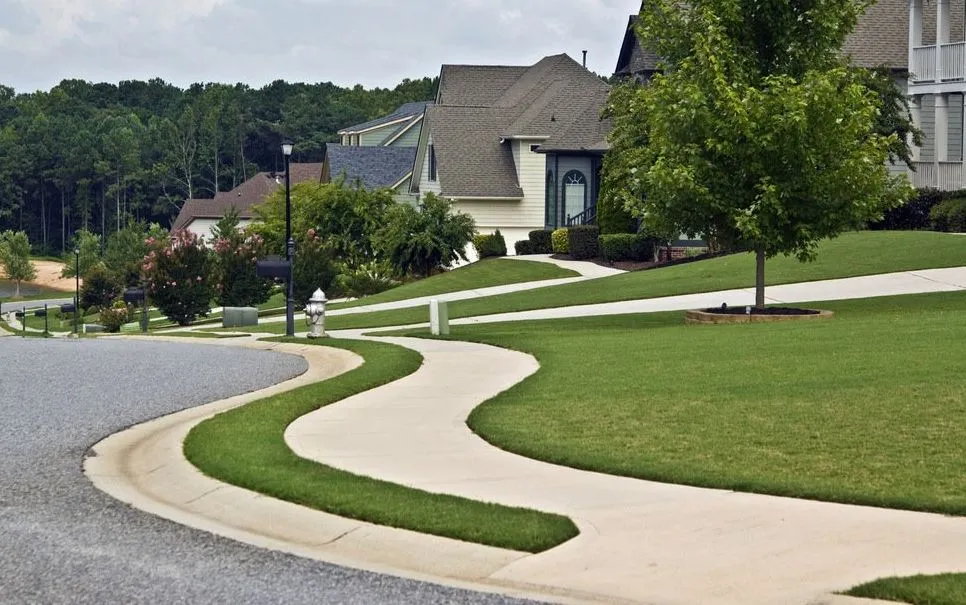
Choose a contractor with a clear, written warranty that spells out scope, duration, and exclusions. Ask to see recent jobs in the neighborhood and call the property owners. On a recent Tampa residential street I surveyed, a well-reviewed local contractor had five houses with concrete work older than five years and no visible cracking or settlement. That kind of track record is tangible evidence.
Benefit 6 — cost transparency and realistic estimates Local estimators have institutional knowledge about hidden costs specific to Tampa, such as the likelihood of requiring a vapor barrier in slab-on-grade builds or the need for additional drainage behind retaining walls. That knowledge leads to more accurate bids. I prefer estimates that break down labor, materials, mobilization, and permit fees separately. A clear line-item estimate helps you compare offers honestly.
A practical tip: demand unit pricing when possible — dollars per square foot for common elements, cubic yards for bulk pours, and linear foot for footings. Local crews can often provide realistic unit pricing because they know the neighborhood logistics, typical labor hours, and supplier rates. National averages can mislead you into under-budgeting.
Benefit 7 — tailored maintenance advice and long-term planning A local company can offer seasonal guidance and a maintenance schedule that reflects Tampa’s Concrete Services Tampa FL All Phase concrete climate. Concrete does not age the same in all places. In coastal Tampa, salt exposure and afternoon sun can accelerate surface wear and cause efflorescence if water migrates through the slab. Good contractors include simple care instructions: how soon to seal a new driveway, recommended sealers that resist UV and salt, and when to schedule joint repairs.
Practical maintenance plan example
- first two weeks: keep traffic off the new pour; remove forms as recommended; monitor for early hairline shrinkage cracks that can be sealed to stop water intrusion.
- month one to three: apply a breathable sealant suited to coastal conditions, typically a silane-siloxane product labeled for salt resistance.
- annual: inspect joints and reapply sealant every two to three years depending on wear and exposure.
Trade-offs and when a local contractor may not be the best fit Local does not automatically mean the right choice. Large, specialized industrial pours with unusual mix requirements sometimes call for a specialist firm that operates statewide. Similarly, if you find a local contractor with poor documentation, vague warranties, or minimal references, national firms with strict quality systems may offer peace of mind.
Be wary of the opposite problem too: a local contractor underbidding dramatically below market rates. That often signifies omitted scope or planned use of cheaper materials. Ask for clarifications and insist on a written scope and change order policy.
How to choose the right local concrete service in Tampa FL Hiring the right team requires a short but targeted vetting process. Focus on these elements: proof of insurance and bonding, local license and references with addresses you can visit, clear written estimates and schedules, and a warranty. Ask about how they handle unexpected weather delays, what mix designs they use for coastal work, and whether they provide written curing and maintenance instructions after the job.
If you want a compact checklist to use when vetting three bidders, the following five items will reveal most red flags:
- Verify insurance and ask for a certificate of insurance that names you as additional insured during the project.
- Request three recent local references and visit at least one job to inspect workmanship.
- Get a detailed written estimate with unit prices, anticipated quantities, and a clear change order process.
- Confirm the specific mix design and admixtures proposed for your project, and ask for a written curing plan.
- Review the warranty in writing, including start date, duration, and what is covered.
Cost considerations — what to expect in Tampa Concrete prices fluctuate with cement and aggregate markets, but you can expect labor to be a significant portion of the budget in Florida because of subgrade prep and weather-protection measures. For a typical residential driveway in Tampa, current ballpark numbers I see on recent projects range from $6 to $12 per square foot for a basic finish, with the higher end reflecting thicker slabs, decorative finishes, or additional base work. Decorative overlays, stamping, or acid staining add measurable costs but can increase curb appeal and perceived value.
Always get three bids, but compare apples to apples. If one estimate is much lower, ask what it excludes. If another is much higher, ask what justifies the premium. A generous markup can be fair if the contractor is including extensive subgrade work, premium mix designs, and a multi-year warranty. A low bid with vague scope is almost always a future problem.
An anecdote about value vs price I once consulted for a homeowner who chose the lowest bidder for a pool deck. The contractor poured directly over untested sand with minimal compaction, saving the homeowner about $1,500 up front. Two years later, the deck developed ponding and heaving along one edge, and the cost to remove and re-pour was close to $9,000. The lesson: reasonable investment in proper preparation often saves multiples of the initial saving.
Final thoughts and a pragmatic approach Hiring local concrete services in Tampa FL is about risk management as much as price. The right local firm brings knowledge of soil behavior, weather patterns, permitting nuances, and long-term maintenance needs. They respond faster, design mixes appropriate to coastal exposure, and back their work because their reputation is local.
Start by assembling three candidates, use the checklist above, and visit recent projects. Ask specific technical questions about mixes, compaction tests, and curing. When a contractor answers clearly and gives examples from nearby projects, you know you have someone who has worked through Tampa's particular challenges rather than someone quoting a national playbook.
Concrete is durable when it is built correctly. Invest in local experience, and the slab you pour today will be the one you rarely think about in five or ten years. That is the real return on hiring a local team. And if you want a referral in Tampa, local companies such as All Phase concrete have long histories in the area and can provide documentation and job-site examples that illustrate the points above.